

Key Points :
- Washington says Russia still runs an offensive bioweapons program
- The 1972 treaty Moscow broke still has no inspectors
- At Sverdlovsk, analysts read the evidence right but couldn’t prove it
- They identified the program but badly underestimated its scale
- The same limits shape how the West reads Russia today
Western intelligence identified the likely cause of a Soviet anthrax outbreak years before independent investigators could confirm it. In 1979, at least 66 people died after anthrax spores escaped from a military facility in Sverdlovsk, while Moscow blamed contaminated meat. By early 1980, US analysts had identified an accident at the facility as the probable explanation. Yet this assessment revealed little about the scale of the offensive biological weapons program the Soviet Union had expanded after signing the Biological Weapons Convention in 1972. Defectors began exposing its wider structure in 1989 and scientific findings published in 1994 confirmed the outbreak’s airborne pattern. Sverdlovsk demonstrates how intelligence can correctly identify a suspicious event while failing to understand the larger system behind it. That distinction remains relevant to assessing Russia’s biological activities today.
In 1972 the Soviet Union signed the Biological Weapons Convention, which bans the development, production and stockpiling of biological agents for anything but peaceful purposes, and within a year it had begun expanding the very program the treaty prohibited. The United States had abandoned its own offensive program three years earlier. The convention gave no one the right to inspect, and its only means of enforcement was a complaint to the UN Security Council, where Moscow held a veto. Signing it therefore committed the Soviet Union to very little that anyone could check, and more than fifty years later the convention still has no means of verifying compliance.
The expansion took the form of Biopreparat, created by a secret decree in 1973, run under the civilian ministry for the microbiological industry and funded by the Ministry of Defense. Its plants produced vaccines and other civilian goods while standing ready to switch to weapons production. Its research institutes ran a program codenamed Ferment to engineer pathogens that had never existed in nature, according to the standard history by Milton Leitenberg and Raymond Zilinskas. The program was built to look like medicine; an example of what intelligence analysts call denial and deception: hiding a weapons effort while offering observers an innocent explanation for whatever they can see. Because a vaccine plant and a weapons plant look much the same from outside, any Russian laboratory working with dangerous pathogens can still be described as defensive, and the claim is as hard to test now as it was in the 1970s.
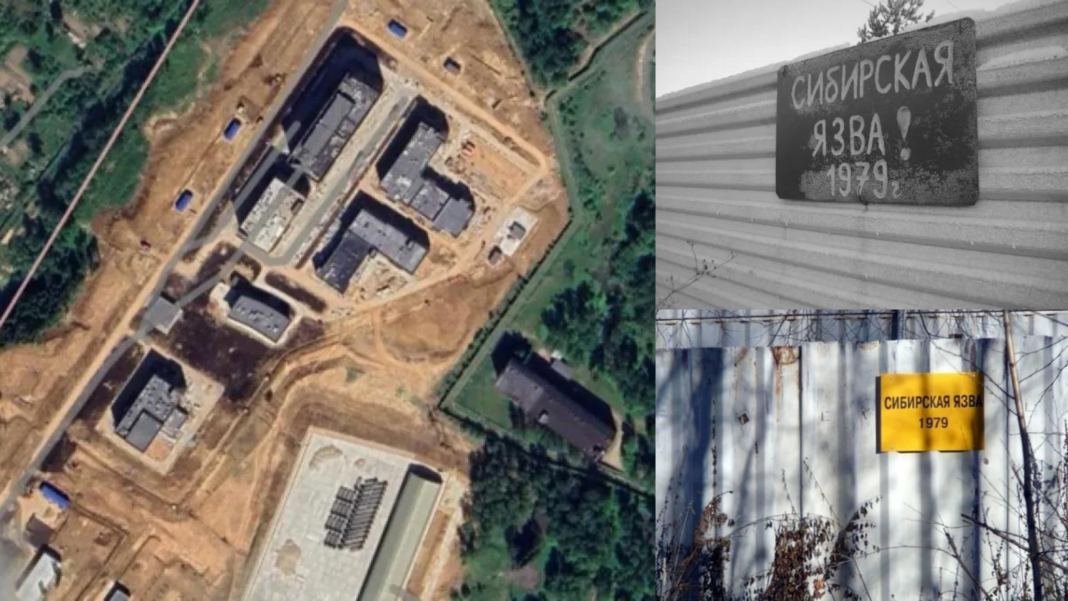
The system leaked on 2 April 1979, when anthrax spores escaped from Compound 19, a military facility in the city of Sverdlovsk, now called Yekaterinburg. The compound belonged to the Ministry of Defense, not to Biopreparat. At least 66 people died over the following six weeks. The authorities treated it as a food scare, warning residents against uninspected meat while the KGB took the hospital records. Each measure could pass as ordinary public health, which made the response effective as concealment, since outsiders trying to establish the cause were left with rumour. The accident exposed the military side of the program while leaving the civilian network, and most of its scale, out of view. Officially, it came down to the meat.
Western intelligence had three main ways of looking into the Soviet program: satellite photographs of suspect sites, human sources ranging from recruited informants to émigrés passing on what they had heard, and intercepted communications. None of them gave it access, so every judgement was an inference made from outside, and in the early years those inferences were weak. In 1965 a CIA study admitted there was no firm evidence of an offensive Soviet program, and its analysts doubted that Vozrozhdeniya, an isolated island in the Aral Sea, was a weapons test site. The island was in fact the program’s open-air test range.
By the 1970s, US and British agencies had identified possible biological weapons facilities at six Soviet sites, Sverdlovsk among them, though largely from imagery whose meaning was highly ambiguous. Two of the six, Berdsk and Omutninsk, had been handed to Biopreparat in 1974. The West was therefore already photographing the civilian program without knowing what it was looking at, which was exactly the problem Biopreparat had been designed to create.
When rumours of an outbreak in Sverdlovsk reached the West in the autumn of 1979, analysts were careful. A CIA report of 15 October treated an accident at a weapons facility as only one possible explanation. Over the following months, satellite imagery and intercepted communications added roadblocks and decontamination around Compound 19 and a visit to the city by Defense Minister Dmitriy Ustinov. As the evidence accumulated the CIA’s judgement hardened with it, and by early 1980 it described the case for a weapons accident as circumstantial but compelling.
Much of this toolkit is now open to anyone. The Washington Post used satellite imagery to identify several new buildings at the Russian Defense Ministry’s institute at Sergiev Posad, near Moscow, at least four of which experts said bore the hallmarks of high-containment laboratories for dangerous pathogens. The institute has a sister center in Yekaterinburg, and its compliance with the treaty has never been tested by inspection. Outsiders can now watch Russia’s laboratories grow, but like the analysts of 1979, they can see the buildings without seeing what happens inside them.
Moscow’s public answer came on 24 March 1980, when TASS condemned the American accusations as psychological warfare and insisted that anthrax occurred naturally in the region. Four days later, Washington formally rejected the Soviet explanation and asked for confidential talks between medical specialists. Because Sverdlovsk was closed to foreigners, neither account could be tested on the ground, and a denial that cannot be tested needs only to be consistent, not convincing.
The most credible doubts came from outside government. Matthew Meselson, a Harvard biologist, judged in 1986 that the Soviet account “seemed to hang together”. Two years later he called it “completely plausible and consistent” with what was known about anthrax. In 1989 he told a Senate hearing that the evidence favored the Soviet explanation. His caution had grounds, since the same intelligence agencies had accused Soviet allies of using “yellow rain” toxins in Southeast Asia, charges later found to be unsubstantiated. The disagreement was less about the evidence than about the standard of proof: analysts could act on a compelling inference, while a scientist needed data he could examine.
That data arrived only after the Soviet Union fell. In May 1992 Boris Yeltsin, who had been Communist Party chief in the region at the time of the outbreak, publicly admitted that the military had been responsible. Meselson’s team then mapped where the victims had lived and worked against the wind on 2 April, finding a narrow zone about four kilometers long and livestock deaths up to 50 kilometers downwind, and published the result in science in 1994. Insiders later attributed the release to a filter that maintenance staff had failed to replace on a vent at the anthrax plant. A correct assessment had taken twelve years to prove because the evidence that settled it sat inside a state that controlled all access to it.
The pattern has outlasted the Soviet Union. In November 2022 Russia asked the UN Security Council to investigate what it claimed was a joint American and Ukrainian military biological program, and the proposal failed with only China joining Russia in favor. Under a treaty without inspections, an accusation, like a denial, rarely has to be proven, and Moscow has used that fact in both directions.
By the mid-1980s Washington was confident enough to make its case in public. In 1984 the Pentagon stated that the Soviet Union had “an active research and development program to investigate and evaluate the utility of biological weapons”, in violation of the convention. Two years later the Defense Intelligence Agency concluded that the “size and scope” of Soviet efforts were inconsistent with any peaceful purpose, and that biotechnology was being folded into the offensive program to “improve agent utility on the tactical battlefield”.
On whether the program existed, the analysts were right; on what it was for, they were divided. Ken Alibek, who had helped run the program, later said its main goal was weapons for “strategic/operational” use against the United States itself. British analysts had assumed that any Soviet effort would be a chemical and biological hybrid for the battlefield, while others had suspected for years that Moscow was developing pathogens as strategic weapons. Intended use remained an open question rather than a settled misjudgment. What no one had grasped was the scale, and Western intelligence knew little about Biopreparat itself. The full picture emerged only after Vladimir Pasechnik defected in 1989: at its height Biopreparat may have employed at least 50,000 people, alongside some 15,000 in Ministry of Defense facilities, with production capacity measured in hundreds of tons.
The underestimation had a source. When the United States abandoned its own program in 1969, Nixon reasoned that nuclear deterrence made biological weapons unnecessary. Christopher Davis, who spent a decade on Britain’s Defense Intelligence Staff and helped debrief Pasechnik, says Western governments then “went to sleep” on the subject, and he calls the result “nuclear blindness”, the belief “that it is only the size of the bang that matters”. Many analysts assumed Moscow had reached the same conclusion as Washington. This was mirror imaging, projecting their own government’s logic onto an adversary that did not share it, and it helps explain how a program of this size stayed out of view. Across those two decades the analysts had moved from having no firm evidence to the right judgement on both the incident and the program’s existence, yet they never had proof, a settled view of its purpose, or any real sense of its scale.
The same risk applies now. Andrew Weber, a former Assistant Secretary of Defense for nuclear, chemical and biological defense, told RFE/RL in 2024 that the Russian Defense Ministry’s biological sites have “remained black boxes to the outside world”. Capability can be estimated from imagery and procurement records, but intent cannot, and intent was the question the analysts of the 1980s could least settle.
Sverdlovsk offers three lessons for how Russia’s program is read today. The first is what the case demonstrated. Western intelligence established that the Soviet program existed, was divided over what it was for and badly underestimated its scale, and proof of all three arrived through an accident and defectors rather than inspections, because the treaty provided none.
The second is how much remains uncertain about Russia now. In its April 2025 compliance report, the State Department assessed that Russia “maintains an offensive biological warfare program”. Moscow describes the same laboratories as part of its “biological defense system”. The new buildings at Sergiev Posad suggest that capacity is growing, but not what it is for. In October 2026 Darya Shipilova, a 28-year-old technician at the Irkutsk Antiplague Research Institute, died of severe pneumonia. Russian authorities ruled out plague and reported no biosafety incidents, while the World Health Organization concluded that a laboratory-associated exposure “cannot be fully excluded”. Her death raises questions of laboratory biosafety and institutional transparency, but nothing in the available evidence connects it to prohibited weapons work.
The third lesson is why these distinctions matter. An intelligence assessment can be well supported without being independently confirmed. The Biological Weapons Convention lacks a standing inspection regime, making verification more difficult and increasing reliance on other sources of evidence, including intelligence reporting, satellite imagery, documentary records and insider testimony. Sverdlovsk demonstrated both the value and limitations of these sources. Western analysts reached a compelling assessment long before Yeltsin’s acknowledgement in 1992 and the subsequent scientific investigation published in 1994. The absence of routine inspections does not make verification impossible, but it can delay confirmation and leave significant uncertainty surrounding competing claims.
Unseen Agents will ask the same questions of every case that follows: what the evidence shows exists, what it suggests about intended use and scale, and how much of it can be verified. Much of what the West finally learned about the Soviet program came not from analysts but from the people who had run it, and it is with them that the next chapter begins.
- Cait, Anthony. (1999). Biohazard: The Chilling True Story of the Largest Covert Biological Weapons Program in the World–Told From Inside by the Man Who Ran It. Science News, 156(6), 82.
- Central Intelligence Agency. (1979). Biological Warfare – USSR: Additional Rumors of an Accident at the Biological Warfare Institute in Sverdlovsk. NSA Archive. https://nsarchive2.gwu.edu/NSAEBB/NSAEBB61/Sverd1.pdf
- Central Intelligence Agency. (1980). Soviet Biological Warfare Agent: Probable Cause of the Anthrax Epidemic in Sverdlovsk. National Security Archive EBB 61, Doc. 4. National Security Archive. https://nsarchive2.gwu.edu/NSAEBB/NSAEBB61/Sverd4.pdf
- UNODA. (1972). Convention on the Prohibition of the Development, Production and Stockpiling of Bacteriological (Biological) and Toxin Weapons and on Their Destruction. https://treaties.unoda.org/t/bwc
- Davis, Christopher. (2014, May 6). Assessing the Biological Weapons Threat: Russia and Beyond – Prepared Statement of Christopher J. Davis. In House Committee on Foreign Affairs, Subcommittee on Europe, Eurasia, and Emerging Threats – ‘Assessing the Biological Weapons Threat: Russia and Beyond’. https://docs.house.gov/meetings/FA/FA14/20140507/102195/HHRG-113-FA14-Wstate-DavisC-20140507.pdf
- Davis, Christopher J. (1999). Nuclear Blindness: An Overview of the Biological Weapons Programs of the Former Soviet Union and Iraq. Emerging Infectious Diseases, 5(4), 509–12. https://doi.org/10.3201/eid0504.990408
- Falk, Pamela. (2022, November 3). U.N. Security Council Rejects Russia’s Call to Probe Debunked U.S.-Ukraine Biological Weapons Claims. CBS News. https://www.cbsnews.com/news/russia-us-ukraine-biological-weapons-lab-claims-un-security-council-vote/
- Feakes, Daniel. (2026). Biological Weapons Convention (BTWC). The Nuclear Threat Initiative. https://www.nti.org/education-center/treaties-and-regimes/convention-prohibition-development-production-and-stockpiling-bacteriological-biological-and-toxin-weapons-btwc/
- FRONTLINE. The 1979 Anthrax Leak | Plague War. Www.Pbs.Org. https://www.pbs.org/wgbh/pages/frontline/shows/plague/sverdlovsk/
- Hoffman, David. (2009). The Other Berlin Wall: How the Soviet Bioweapons Program Was Revealed. Bulletin of the Atomic Scientists. https://thebulletin.org/2009/11/the-other-berlin-wall-how-the-soviet-bioweapons-program-was-revealed/
- Krutov, Mark, and Sergei Dobrynin. (2024). Inside a Secret, Expanding Russian Lab Site With a Bioweapons Legacy. RadioFreeEurope/RadioLiberty, RFE/RL. https://www.rferl.org/a/russia-biological-weapons-laboratory-sergiyev-posad-shoigu-visit/33236030.html
- Leitenberg, Milton, and Raymond A. Zilinskas. (2012). The Soviet Biological Weapons Program: A History. Harvard University Press.
- Lexow, Wilton E., and Julian Hoptman. (1995). The Enigma of Soviet BW. In CIA. https://cia.gov/resources/csi/static/Enigma-of-Soviet-BW.pdf
- Meselson, Matthew, Jeanne Guillemin, Martin Hugh-Jones, et al. (1994). The Sverdlovsk Anthrax Outbreak Of 1979. Science, 266(5188), 1202–8. https://doi.org/10.1126/science.7973702
- Moodie, Michael. (2001). The Soviet Union, Russia, and the Biological and Toxin Weapons Convention. The Nonproliferation Review, 8(1), 59–69. https://doi.org/10.1080/10736700108436838
- RFE/RL’s Siberia.Realities, and Alex Raufoglu. (2026, October 5). Siberian Anti-Plague Institute Staff Isolated After Worker’s Death. RadioFreeEurope/RadioLiberty, RFE/RL. https://www.rferl.org/a/russia-plague-warning-siberia-irkutsk-laboratory/33870385.html
- US Air Force. (1980). The Accidental Explosion at a Secret Biological Weapons Plant at Sverdlovsk. In National Security Archive Electronic Briefing Book No. 61.
- U.S. Department of State. (2025). Adherence to and Compliance with Arms Control, Nonproliferation, and Disarmament Agreements and Commitments. https://www.globalsecurity.org/wmd/library/report/2025/2025-arms-control-treaty-compliance-report_dos_20250421.pdf
- US Department of State. (1986). Cable No. 291907. In National Security Archive Electronic Briefing Book No. 61. https://nsarchive2.gwu.edu/NSAEBB/NSAEBB61/Sverd27.pdf
- US Department of State. (1980). Sverdlovsk Incident. In National Security Archive. https://nsarchive2.gwu.edu/NSAEBB/NSAEBB61/Sverd10.pdf
- Wampler, Robert A., and Thomas S. Blanton, eds. (2001). Anthrax at Sverdlovsk, 1979. Nsarchive2.Gwu.Edu. https://nsarchive2.gwu.edu/NSAEBB/NSAEBB61/
- World Health Organization. (2026). Pneumonia of Undetermined Etiology – Russian Federation. Who.Int. https://www.who.int/emergencies/disease-outbreak-news/item/2026-DON620
click HERE to download as PDF.