

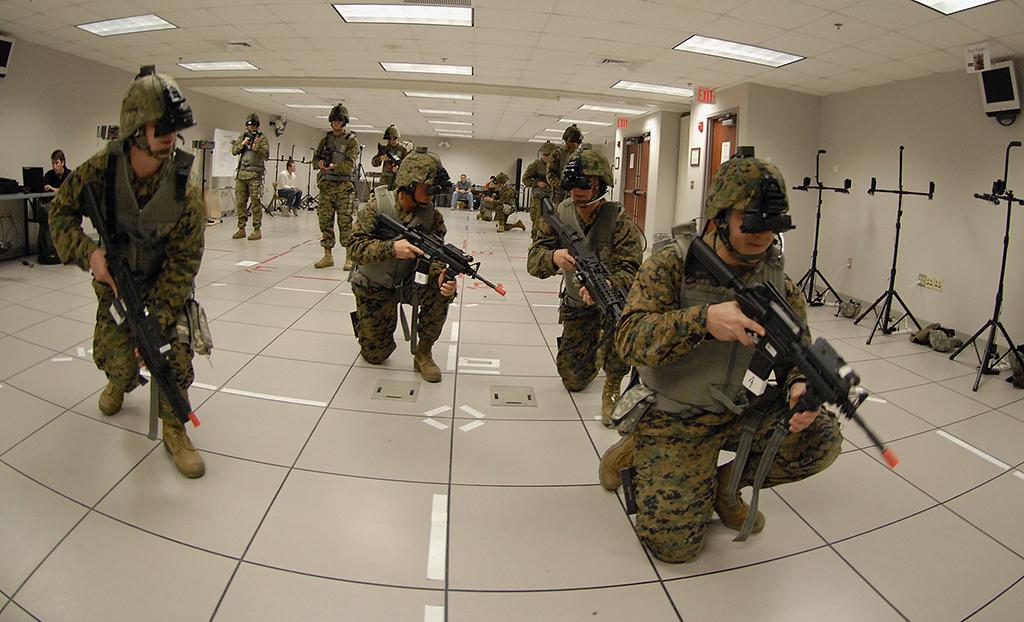
Military simulation has evolved from a cost-saving supplement into a core pillar of combat readiness. The evidence from Ukraine, NATO exercises, and decades of research tells a nuanced story – simulation is transformative in specific domains, but far from a universal solution.
Key Points :
- The $14 billion military simulation market reflects a fundamental shift: modern warfare scenarios- drone swarms, cyber attacks, electronic warfare- simply cannot be trained for through live exercises alone.
- Controlled studies show simulation-trained personnel match live-fire performance in marksmanship, while meta-analyses demonstrate 14-20% gains in procedural knowledge and self-efficacy – but simulation produces only ~76% of real-life combat stress.
- Ukraine’s war proves the model works at scale: 5,000+ drone pilots trained on $30 simulators, 10 operators neutralizing a NATO brigade in exercises – but RAND’s consistent finding remains that simulation supplements, never replaces, live training.
In December 2025, a group of Ukrainian soldiers entered an underground bunker with joysticks and VR goggles. In the “Shooter VR: Duelist” simulator, they flew dozens of FPV drone sorties. Combat veterans observing the session offered a striking verdict: there was essentially no difference between the simulator and real combat conditions. Within weeks, these pilots would be flying real missions at the front.
This scene captures a profound shift in how wars are prepared for – and fought. Military simulation systems are no longer supplementary training aids that save fuel and ammunition. They have become a primary instrument shaping combat effectiveness, cognitive readiness, and multi-domain coordination. The global military simulation market surpassed $14 billion in 2025 and is projected to exceed $22 billion by 2034.
Understanding why requires examining what has changed about war itself.
Three converging pressures have elevated simulation from “nice to have” to strategic necessity.
First, the character of war has changed radically. An estimated 70-80% of casualties in the Russia-Ukraine conflict are inflicted by drones. Cyberattacks paralyze infrastructure in seconds. Electronic warfare blinds command networks. These threats exist simultaneously across land, sea, air, cyber, and electromagnetic domains – the essence of Multi-Domain Operations. Training personnel for this complexity through live exercises alone is neither safe nor feasible.
Second, live training has hit economic and physical limits. An F-35 costs $34,000-44,000 per flight hour; an M1A2 Abrams burns roughly $80,000 per hour in fuel and wear. More fundamentally, scenarios like full-scale GPS jamming or cyberattack response cannot be executed in live environments without endangering civilian infrastructure and violating international regulations.
Third, the technology has matured. VR/AR costs have dropped significantly. AI can adapt training scenarios in real time. Digital twin technology replicates battlefields down to the square meter. The U.S. Army’s Synthetic Training Environment (STE) connects individual soldiers through corps-level headquarters in a single digital battle space, while the Joint Simulation Environment (JSE) trained 820 F-35 pilots and generated over 4,300 virtual sorties in FY2024 alone. JSE’s director described it as the first simulator that gives pilots “a true sense of fear.”
The critical question is whether simulation genuinely improves warfighter competency. The data, drawn from decades of meta-analyses and controlled studies, provides a clear but nuanced answer.
Marksmanship and individual skills represent the best-documented domain. Research found no statistically significant differences between simulator and live-fire performance in hit percentage, reaction time, and radial error. A clinical study with airborne soldiers demonstrated that marksmanship correlates with cognitive flexibility and processing speed (p = 0.006), not physical fitness – confirming simulation’s role in training the mental dimensions of combat. Sitzmann’s meta-analysis of 65 studies (N=6,476) found simulation-trained groups showed 20% higher self-efficacy, 14% higher procedural knowledge, and 9% better retention.
Medical competency shows particularly strong results. A 2022 randomized controlled trial found that simulation-based tactical casualty care training improved tourniquet placement scores by 36.7% (p < 0.001), with gains sustained months later. A systematic review across ten studies confirmed improvements not only in individual medical skills but in team communication during trauma management.
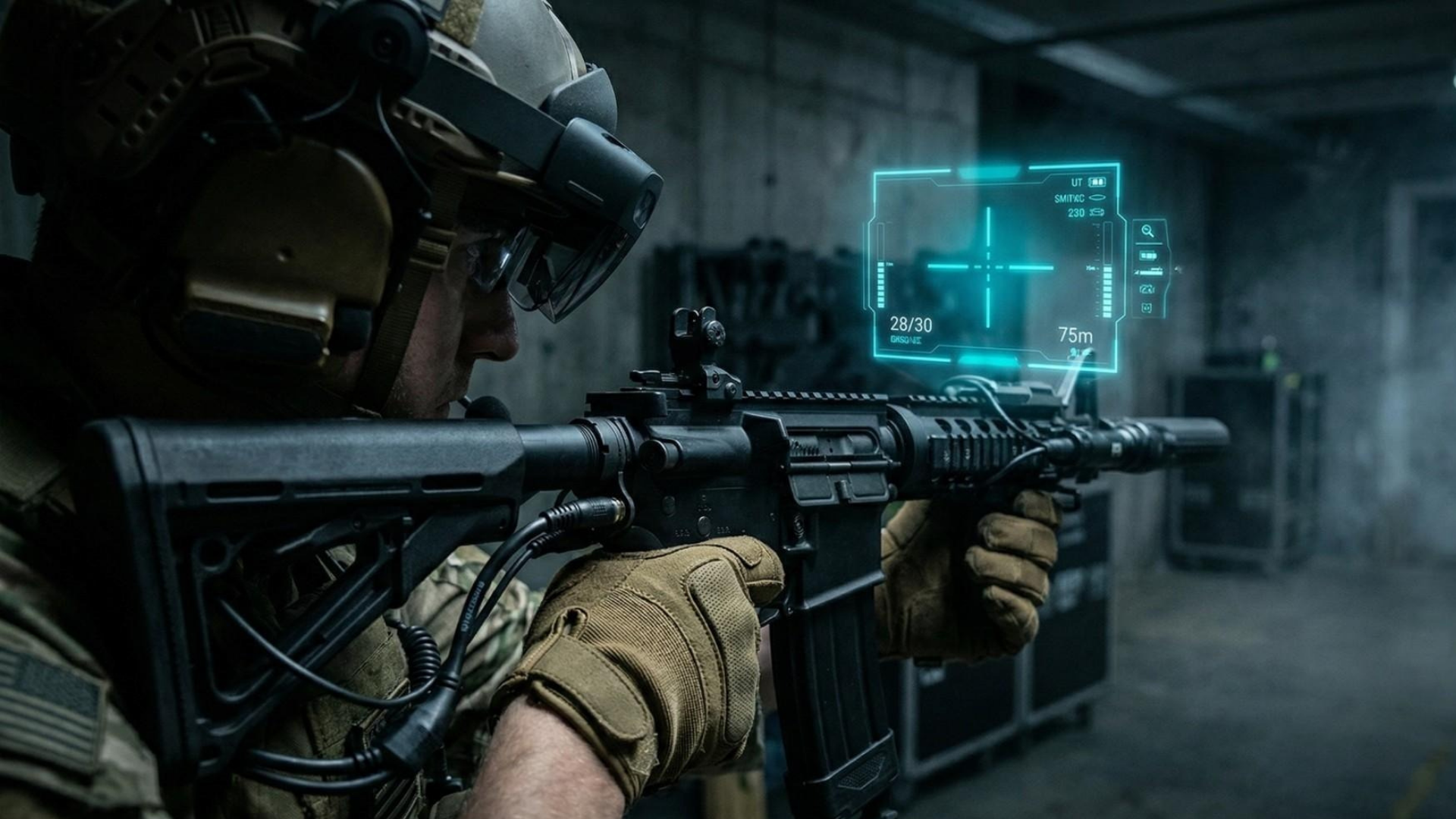
Leadership and decision-making benefit substantially. A study with MC-130P aircrews found a 0.86 correlation between simulated mission rehearsal and actual mission success. At Canada’s Royal Military College, redirecting classroom time to virtual simulation produced “dramatic” improvements in tank commander decision-making. Meanwhile, VR-based PTSD treatment achieved an 80% success rate among Iraq and Afghanistan veterans – proving simulation’s value extends beyond pre-deployment training into post-combat recovery.
The Russia-Ukraine war has become the most consequential proving ground for simulation-based training. The Ukrainian Fight Drone Simulator (UFDS), available for roughly $30, trained over 5,000 military FPV pilots. Next-generation simulators tested in late 2025 achieved 90% realism ratings from combat veterans, with target handoff speeds doubling after training. Ukraine’s elite FPV battalions – Magyar’s Birds, Nemesis
Regiment – shape their operators not through rigid doctrine but through continuous experimentation and simulator-driven iteration.
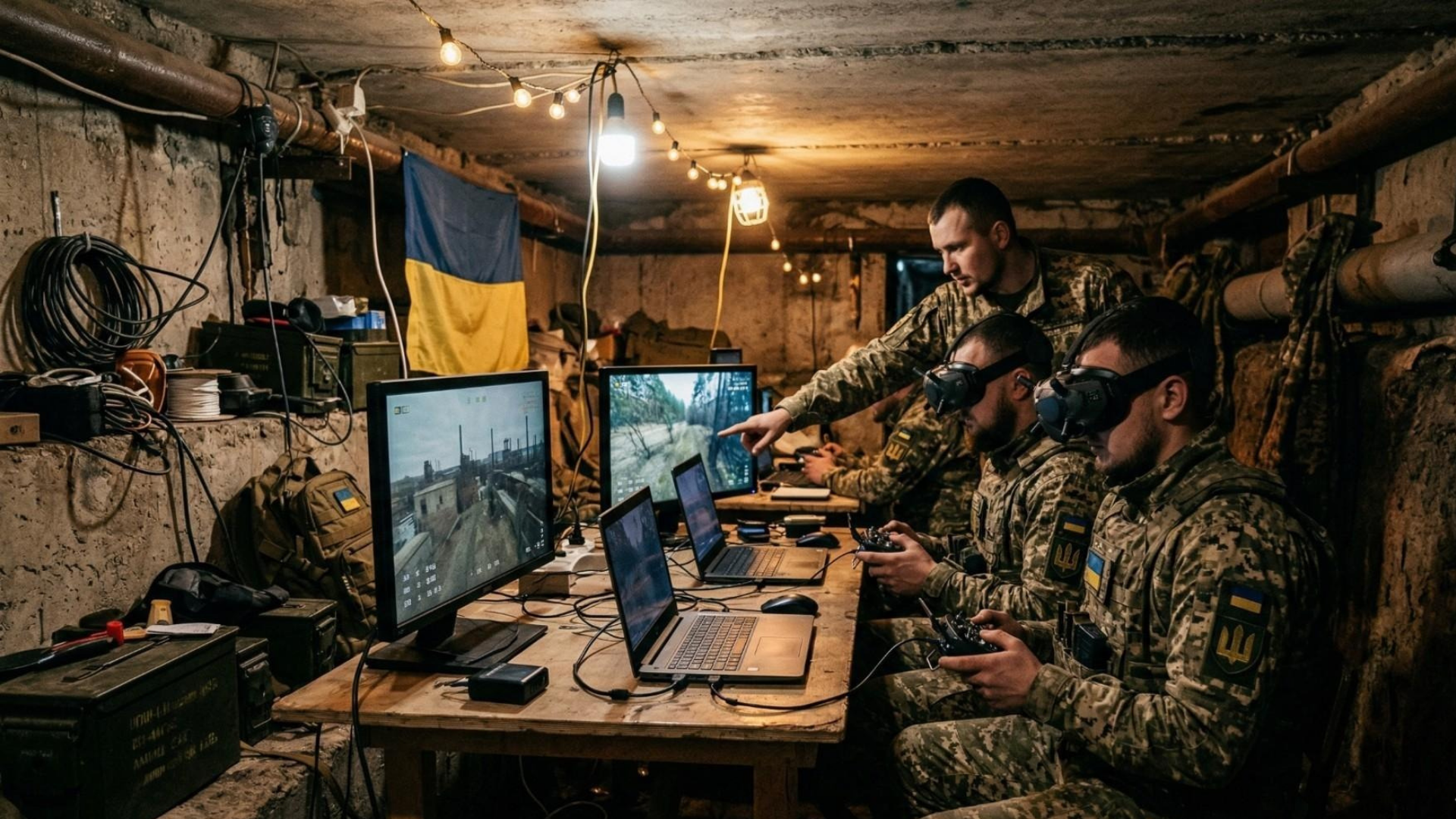
The most striking evidence came from a 2025 NATO exercise: 10 Ukrainian drone operators rendered a British brigade and Estonian units combat-ineffective within 12 hours, knocking out 17 armored vehicles with 30 strikes. The U.S. Army responded by launching TRADOC’s first FPV course at Fort Rucker, beginning with 20-25 simulator hours. Germany announced plans for six attack drone units by 2029.
At the alliance level, NATO’s CWIX25 exercise united nearly 3,000 personnel from 40 nations testing 570+ capabilities across five domains. The Distributed Synthetic Training agreement, signed in 2025 with 13 allies including Turkey, aims to interconnect national simulation networks. NATO’s JTLS-GO integration shows 45% reductions in exercise planning time and 40% cuts in contractor costs.
A credible assessment must acknowledge what simulation cannot do. VR stress inoculation produces approximately 76% of real-life physiological stress – powerful, but not complete. The Australian Army warns that the absence of a “fear factor” can produce overconfidence. Poorly calibrated simulators risk “negative training transfer” where simulated habits degrade field performance. RAND’s 2019 study found evaluations typically measure simulator metrics and user satisfaction rather than objective combat outcomes. Even within NATO, legacy systems often cannot communicate, and cybersecurity accreditation causes delays.
RAND’s most important finding, however, is methodological: psychological fidelity matters more than physical fidelity. A lower-cost system that triggers the right cognitive responses can outperform an expensive visual spectacle that fails to engage meaningful decision-making. This insight carries profound procurement implications.
Is military simulation a “game changer”? Not on its own. But a training doctrine in which simulation is deeply integrated absolutely is. The evidence converges on a clear model: simulation excels at cognitive skills, procedural knowledge, medical competency, and mission rehearsal. It falls short in replicating mortal fear, physical endurance, and the full friction of combat. The forces that will hold the decisive readiness advantage are those that architect the optimal blend of live and virtual training – guided by the principle that psychological fidelity, not visual spectacle, drives genuine training transfer.
Ukraine’s battlefield has delivered the hardest lesson: armies without simulator-trained drone operators now face catastrophic asymmetric disadvantages. That is no longer a projection. It is today’s reality.
- Sitzmann, T. “A Meta-Analytic Examination of the Instructional Effectiveness Computer-Based Simulation Games.” Personnel Psychology, 64(2), 2011.
- RAND Corporation. “Collective Simulation-Based Training in the U.S. Army.” RR-2250-A, 2019.
- Niu & Ma. “The effectiveness of simulation-based training on the competency of military nurses.” Nurse Education Today, 2022.
- NATO ACT. “Advancing NATO Transformation Through the M&S Centre of Excellence.” 2025.
- Army Inform (Ukraine). “Troops begin testing next-generation FPV simulator.” December 2025.
- Johns Hopkins APL. “Generative AI Wargaming Promises to Accelerate Mission Analysis.” March 2025.
- Lockheed Martin. “Furthering Military Readiness with Advanced Simulation Technology.” 2025.
- Inside Unmanned Systems. “Beyond the Gauntlet: Drone Dominance and Ukraine’s FPV War.” 2025.
- McGaghie et al. “Does Simulation-Based Medical Education With Deliberate Practice Yield Better Results?” Academic Medicine, 2011.
- CBS News. “Ukrainian drone pilot training turned into a video game.” 2025.
click HERE to download as PDF.